
Does the Plywood Tariff Affect Engineered Hardwood?
Finished engineered flooring is excluded from the 2026 plywood cases, but imported underlayment and cores can raise costs. Check rates and exposure.
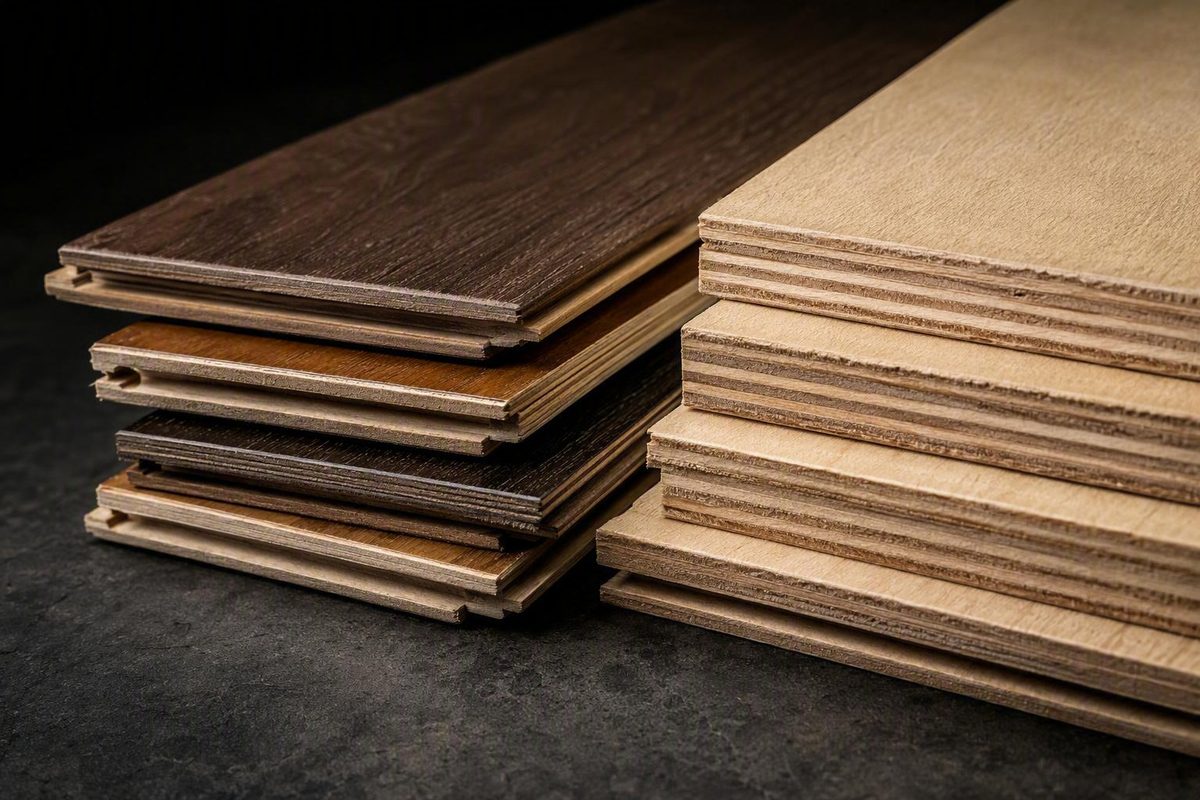
No—the new 2026 antidumping and countervailing duties on hardwood and decorative plywood from China, Vietnam, and Indonesia do not apply directly to finished multilayered engineered wood flooring. The scope excludes that flooring: Chinese products remain subject to the separate multilayered-wood-flooring orders dating from 2011, while covered flooring from Vietnam and Indonesia is carved out. The new plywood duties can still raise flooring-project costs through imported lauan or meranti underlayment, plywood repair panels, and veneer-core platforms used to manufacture engineered flooring in the United States.
Choose the product and origin, then enter your area and pre-duty material value to estimate the plywood-duty exposure.
This tool screens the new China, Vietnam, and Indonesia hardwood-plywood cases. It does not calculate separate flooring orders, ordinary duties, or other tariffs.
Chinese finished engineered flooring does not receive the new plywood rate.
Check the separate multilayered-wood-flooring orders dating from 2011 and any other applicable tariff layers.
Estimated plywood-duty delta: $0 under these new cases. Separate flooring duties are not calculated.
| Product | Origin | 2026 Plywood Result | Reported Rate |
|---|---|---|---|
| Finished engineered flooring | China | Excluded; check 2011 flooring orders | Not calculated |
| Finished engineered flooring | Vietnam | Excluded from new plywood scope | 0% under these cases |
| Finished engineered flooring | Indonesia | Excluded from new plywood scope | 0% under these cases |
| Finished engineered flooring | U.S./other | Outside these country orders | — |
| 1/4-inch lauan/meranti underlayment | China | In scope if specifications match | ~275% |
| 1/4-inch lauan/meranti underlayment | Vietnam | In scope if specifications match | 138%–255% |
| 1/4-inch lauan/meranti underlayment | Indonesia | In scope if specifications match | 28%–213% |
| 1/4-inch lauan/meranti underlayment | U.S./other | Outside these country orders | — |
| Birch plywood subfloor patch | China | Potentially in scope; verify panel | ~275% |
| Birch plywood subfloor patch | Vietnam | Potentially in scope; verify panel | 138%–255% |
| Birch plywood subfloor patch | Indonesia | Potentially in scope; verify panel | 28%–213% |
| Birch plywood subfloor patch | U.S./other | Outside these country orders | — |
| Veneer-core platform | China | In scope if specifications match | ~275% |
| Veneer-core platform | Vietnam | In scope if specifications match | 138%–255% |
| Veneer-core platform | Indonesia | In scope if specifications match | 28%–213% |
| Veneer-core platform | U.S./other | Outside these country orders | — |
| U.S.-made floor using imported platform | China platform | Indirect input-cost exposure | ~275% on input |
| U.S.-made floor using imported platform | Vietnam platform | Indirect input-cost exposure | 138%–255% on input |
| U.S.-made floor using imported platform | Indonesia platform | Indirect input-cost exposure | 28%–213% on input |
| U.S.-made floor using domestic/other platform | U.S./other | Outside these country orders | — |
Calculation: project area × overage factor × entered pre-duty imported-material value × reported combined deposit rate. It does not apply the rate to labor or the full retail flooring price.
Sources: U.S. Commerce final determinations published July 21, 2026; reported ITC final injury determination, August 19–20, 2026. Rates are approximate or ranges; confirm producer-exporter instructions.
The reported combined antidumping and countervailing duty rates are about 275% for China, 138% to 255% for Vietnam, and 28% to 213% for Indonesia. Those are country-level headline figures, not universal retail price increases. Actual cash-deposit treatment can depend on the producer, exporter, entry date, and final customs instructions.
The calculation also should not be applied to an entire flooring invoice. When the affected item is underlayment or a core platform, the duty is based on the entered value of that imported material—not labor, finished-floor retail markup, adhesive, delivery, or the rest of the project.
This is general information rather than a binding classification, scope ruling, or entry calculation.
Finished Engineered Flooring Is Excluded From the New Plywood Scope
Commerce published final affirmative antidumping determinations for hardwood and decorative plywood from China, Vietnam, and Indonesia on July 21, 2026. The U.S. International Trade Commission then reached its affirmative final injury determination on August 19–20, clearing the way for Commerce to issue AD/CVD orders.
The decisive language is the product scope, not the presence of a plywood core. Finished multilayered wood flooring is expressly excluded from these new hardwood-and-decorative-plywood cases.
For China, the exclusion reflects the fact that multilayered wood flooring is already addressed by flooring-specific antidumping and countervailing duty orders dating from 2011. A Chinese engineered floor therefore may have separate trade-duty exposure, but the new plywood rate should not simply be added to it.
Finished engineered flooring from Vietnam and Indonesia is also carved out of the new plywood proceedings. It does not become covered merely because its core consists of cross-laminated veneers.
The official China final determination, Vietnam final determination, and Indonesia final determination contain the country-specific findings and scope appendices. The reported ITC result and combined rate ranges appear in the petitioners’ counsel’s account of the final injury determination.
That exclusion answers the direct question about the new cases. It does not exempt engineered flooring from every other customs duty or trade measure.
Underlayment And Core Materials Remain Exposed
The new duties matter most where plywood enters the United States as plywood rather than as completed multilayered flooring.
Thin lauan or meranti panels used beneath resilient flooring, laminate, or engineered wood are within the product category when they meet the order’s physical scope and come from a covered country. The same issue applies to imported veneer-core platforms that a U.S. manufacturer later turns into engineered flooring.
A birch plywood sheet used to patch a subfloor also may be covered. Its treatment depends on the panel’s construction, origin, producer, exporter, and the scope language. Calling it a “subfloor patch” does not change what the imported sheet is.
The practical exposures are:
| Imported Item | New Plywood-Duty Effect | Flooring Consequence |
|---|---|---|
| Finished engineered floor | Excluded | No direct duty under these cases |
| Lauan or meranti underlayment | In scope if specifications match | Underlayment cost can rise |
| Birch plywood patch panel | Potentially in scope | Repair-material cost can rise |
| Veneer-core platform | In scope if specifications match | Some U.S.-made flooring can cost more |
For a U.S. manufacturer, the duty is assessed when the covered platform or plywood component is imported. The finished floor assembled domestically is not charged the same import duty again. The manufacturer may absorb the input cost, pass through part of it, change suppliers, or incorporate it into later wholesale prices.
A foreign flooring factory does not incur a U.S. import duty merely because it uses Chinese, Vietnamese, or Indonesian plywood abroad. The relevant U.S. entry is the completed flooring, and that merchandise is excluded from these new plywood cases. Separate origin rules or flooring-specific orders may still apply.
A Plywood Classification Does Not Override The Flooring Exclusion
“Engineered hardwood flooring” is a construction and marketing description, not a single customs classification. Some finished floors can be classified in a plywood provision even though the new AD/CVD scope excludes them.
A reproduced 2016 Customs and Border Protection ruling addressed a three-layer engineered oak panel with:
- a 3 mm oak face veneer;
- an 11 mm pine-lumber core;
- a 1 mm poplar back ply; and
- grain in each layer running at an angle to the successive layer.
CBP classified that particular floor under HTSUS 4412.94.3105, a plywood wood-flooring provision. The panels could be tongued and grooved, colored, and oil-coated. The reproduced CBP ruling provides the construction and classification.
The ruling reported an 8% general duty rate for that subheading in 2016. That historical rate is not a current or universal rate. Classification and tariff treatment must be checked for the shipment’s actual entry date.
More importantly, HTSUS classification and AD/CVD scope are separate tests. A product can be classified as plywood for ordinary customs purposes yet excluded from a particular plywood trade order because the written scope excludes multilayered wood flooring.
The reverse also can occur: a floor outside the new plywood order may fall under a flooring-specific order or another tariff program. A customs code alone does not resolve every additional duty.
For classification, construction details can include the material and thickness of every layer, grain direction, core type, backing, panel dimensions, edge machining, and whether the wear surface is a continuous veneer or an assembly of strips. A technical data sheet and cross-sectional drawing are more useful than a retail name such as “European oak engineered hardwood.”
Chinese Flooring Still Requires A Separate Duty Review
Exclusion from the 2026 plywood proceedings does not mean Chinese engineered flooring is duty-free. Certain multilayered wood flooring from China has been subject to flooring-specific AD/CVD orders since 2011.
A Chinese finished floor therefore requires two distinct findings:
- It is excluded from the new hardwood-and-decorative-plywood scope as multilayered wood flooring.
- It must be checked against the separate Chinese multilayered-wood-flooring orders and any other applicable tariff layers.
The applicable result can depend on construction, origin, producer, exporter, entry date, exclusions, and current customs instructions. The approximately 275% combined plywood figure should not be transferred to a Chinese engineered-flooring SKU merely because that floor has a plywood core.
Ordinary customs duties and other additional tariffs also remain separate from the 2026 plywood cases. A supplier saying that a price is “tariff affected” has not identified which measure applies.
Ask the supplier to specify:
- the imported item that incurred the charge;
- its country of origin;
- the trade order or tariff program;
- whether the charge concerns finished flooring or a component; and
- whether the quoted stock is already in the United States.
Duty Percentages Do Not Translate Directly Into Retail Increases
A 138%, 213%, or 275% duty does not mean the complete installed floor rises by that percentage. The duty applies to the customs value of covered imported merchandise. A retail project includes other materials, freight, distribution costs, margins, labor, preparation, and installation.
For an underlayment estimate, the planning formula is: covered area including overage multiplied by the pre-duty imported-material value per square foot multiplied by the applicable deposit rate.
Vietnam and Indonesia produce ranges because treatment can vary by company and investigation result. A planning estimate should therefore show a low and high result until the producer-exporter rate is confirmed. The calculator above does that; it does not attempt to predict retailer markup or final assessed liability.
Pass-through also varies. Supplier responses reported in 2025 included partial cost absorption, an 8% increase for one China-produced engineered product, and delayed increases where domestic inventory was available. Floor Covering News reported those different supplier responses.
Those examples are not forecasts for the 2026 plywood orders. They show why a headline duty and a store-price change are different figures. Existing inventory, contracts, alternative sourcing, competition, freight, currency movements, and supplier margins can change the timing and amount passed to a buyer.
For an active project, confirm whether the quote is firm through delivery, includes announced surcharges, and covers material already held in domestic inventory. A tariff-adjustment clause can matter more to the final bill than a general supplier announcement.
Product Documentation Determines The Correct Result
For finished flooring, collect the manufacturer, manufacturing country, exporter, construction diagram, and proposed HTSUS classification. If it is Chinese, check the flooring-specific orders rather than applying the new plywood rate.
For underlayment, repair panels, or platforms, document:
- panel thickness and dimensions;
- face and core species;
- number and arrangement of plies;
- surface treatment;
- country of origin;
- producer and exporter; and
- expected entry date.
Then compare the actual item with the full official scope and exclusions. Company-specific deposit instructions can matter, so the country-wide range is only an initial screening figure.
A homeowner usually does not need to reconstruct the customs entry. The useful questions are whether the flooring is already in U.S. inventory, whether underlayment is priced separately, whether the quote includes current surcharges, and whether the seller will hold the price through delivery.
An importer or manufacturer needs a more exact review. A customs broker can examine classification and entry treatment. A trade attorney may be appropriate when a product sits near a scope boundary, relies on a complicated origin claim, or will be imported repeatedly.
For material-selection context beyond the tariff issue, compare the construction and installation differences among engineered wood, laminate, and solid hardwood.
The Practical Verdict By Product
A finished engineered hardwood floor from China, Vietnam, or Indonesia is not directly covered by the new 2026 hardwood-and-decorative-plywood duties. Chinese flooring may still face the separate orders covering multilayered wood flooring from China.
Imported lauan or meranti underlayment is the clearest flooring-project exposure. Imported birch repair plywood and veneer-core platforms also can be covered when their construction meets the scope.
U.S.-made engineered flooring can therefore experience an indirect price increase when its manufacturer imports a covered core platform. A domestically produced line using domestic or non-covered inputs does not acquire the plywood duty merely because the finished board has a layered core.
The correct budget adjustment starts with the imported item, not the retail product name. Apply the relevant rate only to the covered plywood or platform value, and use the producer-exporter deposit instruction when it is available.