
Carpet Flooring Installation Cost: Room Estimates
A retailer-reported $2–$8 per sq. ft. installed benchmark generally includes carpet, padding and labor, with regional limits clearly noted.
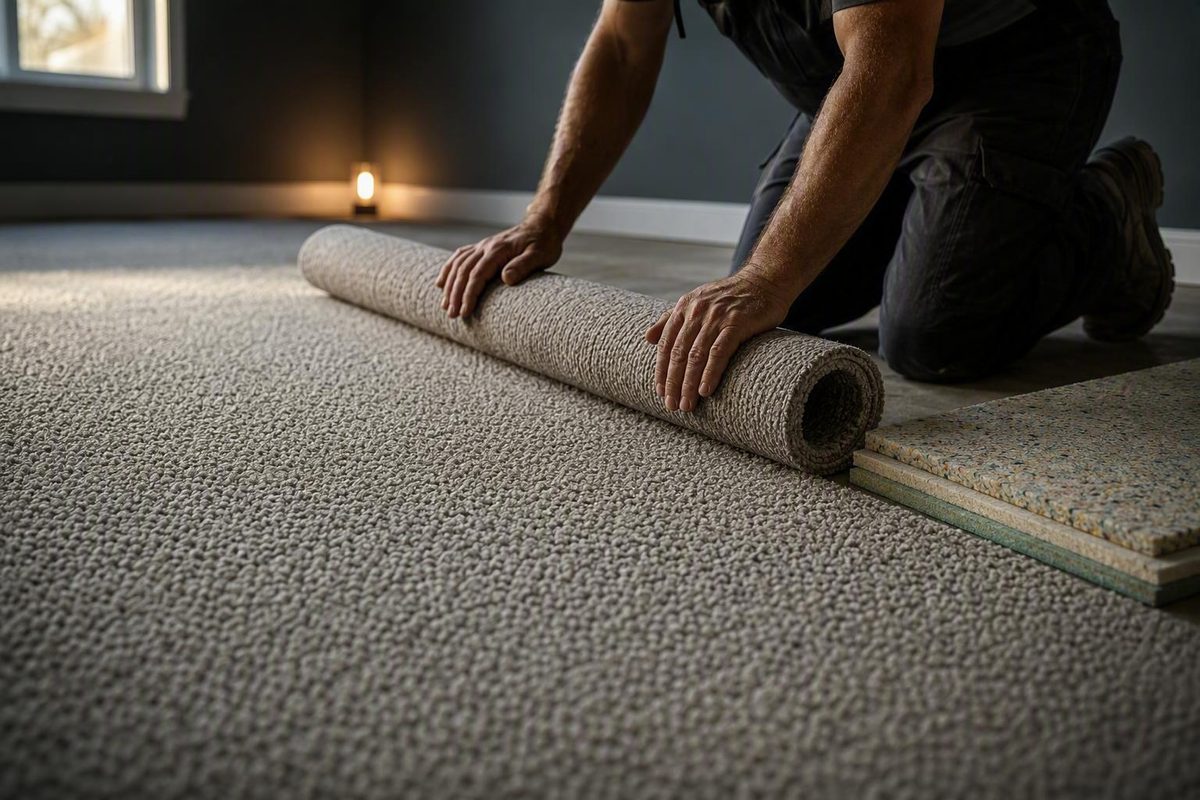
For an initial budget, allow $2–$8 per square foot installed. Carpet Exchange, a commercial flooring retailer, reports that range as generally including carpet, padding, and labor. It separately lists labor at $0.50–$1.50 per square foot and padding at $0.25–$1.00 per square foot. These are retailer-derived planning figures, not an independently established national average, and the source does not establish how well they represent prices across different regions. Do not add the component rates to the installed range when they are already included. See Carpet Exchange’s cost breakdown.
At that benchmark, a measured 12-by-12-foot room could start around $288–$1,152. If the price instead applies to approximately 160 square feet of ordered material, the planning range becomes roughly $320–$1,280 before confirmed extras. A local, itemized quote is more reliable than either estimate.
Quick answer: a cautious installed-cost benchmark
Treat the retailer-reported installed range as a starting point, not a prediction of your final carpet flooring installation cost. The actual total can change with:
- Carpet product and grade
- Local labor conditions
- Measured floor area versus billable material quantity
- Room shape, seams, and pattern alignment
- Padding specification
- Installation method
- Stairs and transitions
- Existing-floor removal and disposal
- Furniture handling
- Subfloor preparation or repairs
- Delivery, travel, taxes, or minimum charges if the provider applies them
- Services excluded from an advertised installation package
The retailer’s labor and padding figures describe components of its installed benchmark, not automatic surcharges. If a quote already includes carpet, padding, and installation, adding generic labor and padding allowances would count the same costs twice.
For a useful preliminary estimate, think beyond:
Room area × advertised rate
Instead, use:
Billable carpet quantity × applicable installed rate + confirmed extras
An in-home measurement and written scope should identify the quantity being priced, the work included, and any additional services the room requires.
Carpet cost calculator and 12-by-12 room example
Use this three-step planning formula:
- Measured room area × estimated waste factor = approximate order quantity
- Approximate order quantity × installed rate = rough base budget
- Rough base budget + confirmed extras = preliminary project budget
For a rectangular room, multiply length by width:
12 feet × 12 feet = 144 square feet
Carpet Exchange suggests adding about 10% as a rough allowance for cuts and waste. Applied to this room:
144 × 1.10 = 158.4 square feet
For planning, that can be rounded to approximately 160 square feet. The following totals are arithmetic applications of the retailer’s $2–$8 installed benchmark, not independently verified market averages. Review the underlying benchmark and waste allowance.
| Pricing basis | Calculation | Rough base budget |
|---|---|---|
| Measured floor area | 144 sq. ft. × $2–$8 | $288–$1,152 |
| Approximate order quantity | 160 sq. ft. × $2–$8 | $320–$1,280 |
Ask the estimator which quantity controls the price. A provider might price measured floor area, the material ordered, or the project as one bundled total.
The 10% allowance is only a shortcut. Carpet roll width, seam placement, room geometry, closets, pile direction, and pattern repeat can result in a different order quantity. Patterned carpet is particularly sensitive because adjoining pieces must align. Request a seam diagram and pattern-repeat calculation rather than assuming a flat waste percentage will cover the job.
What the quoted price may include
The Carpet Exchange benchmark generally includes carpet, padding, and labor. It does not establish that removal, repairs, transitions, furniture handling, stairs, or other project services will be included in every provider’s quote.
Use the following table as a confirmation checklist rather than an industry-wide statement about standard packages:
| Quote item | Evidence-based context | What to confirm |
|---|---|---|
| Carpet | Included in the cited installed benchmark | Manufacturer, style, color, and billable quantity |
| Padding | Included in the cited installed benchmark | Material, thickness, density, and warranty compatibility |
| Installation labor | Included in the cited installed benchmark | Installation method and exact labor scope |
| Tack strip | Treatment depends on the project and provider | Required work and whether it is included |
| Transitions | Identified by CRI as a planning consideration | Type, quantity, material, and installation charge |
| Old-carpet removal | The retailer guide lists it as a possible extra | Area covered and whether padding removal is included |
| Disposal | Lowe’s identifies dump fees as a possible charge | Hauling and disposal charges |
| Furniture moving | The retailer guide and Lowe’s identify possible charges | Included pieces, exclusions, and oversized-item fees |
| Floor preparation | CRI identifies substrate preparation as a scope issue | Scraping, patching, repairs, cleaning, and limits |
| Stairs | The retailer guide lists a separate potential charge | Number of stairs, landings, edges, and installation details |
| Delivery or travel | Lowe’s may apply mileage charges in specified circumstances | Service radius, delivery, and mileage terms |
| Taxes | Quote treatment depends on the provider and location | Whether taxes are included in the final total |
| Warranty | Coverage is product- and provider-specific | Labor term, product coverage, exclusions, and claim process |
Provider packages differ. Lowe’s, for example, uses an in-home measurement followed by a personalized quote covering purchased flooring, labor, needed padding or underlayment, limited basic preparation, cleanup, and applicable additional charges. Its stated potential extras include mileage beyond 20 miles, furniture handling, and dump fees. Lowe’s also says it will not install new carpet over old padding, so replacement padding is required for its package. These are Lowe’s policies, not universal industry rules. Review Lowe’s carpet-installation terms.
Before relying on an installation promotion, ask whether labor is bundled into the carpet price, limited to selected products, or subject to a minimum purchase. The useful figure is the complete installed total, not the promotional labor line by itself.
Add-ons that can raise the total
Carpet Exchange’s commercial retailer guide reports the following potential additional charges. These are conditional planning figures from the same source as the base benchmark—not universal rates—and should be added only when the work is required and excluded from the base quote.
| Potential add-on | Retailer-reported amount | 144-sq.-ft. example |
|---|---|---|
| Old-carpet removal | $0.70–$1.60 per sq. ft. | About $101–$230 |
| Subfloor repair | $1.75–$4.70 per sq. ft. | About $252–$677 if the entire room is affected |
| Furniture moving | $25–$75 per room | $25–$75 |
| Stair installation | $150–$600 total | Depends on whether stairs are included |
The removal and repair totals are arithmetic applications of the reported rates. The full-room repair example is not a prediction: isolated damage could affect only part of the room, while major structural replacement falls outside the supplied pricing evidence and requires a project-specific assessment.
Stairs, transitions, difficult or oversized furniture, old-material disposal, travel, and floor damage should appear as separate line items when applicable. Ask the estimator to explain these items rather than placing them inside an undefined project adjustment.
Do not create an artificial worst-case total by stacking every high-end figure. A room may not require stairs, extensive repairs, furniture moving, and separately charged removal. Some services may also be included in the main quote.
Base installed quote + required excluded services = comparable project total
Why two quotes for the same room can differ
Identical floor area does not necessarily mean identical installation scope. The Carpet and Rug Institute’s residential installation standard identifies measurement, seam placement, pile direction, pattern alignment, transitions, substrate condition, cushion or adhesive, stairs, and installation method as planning considerations. It distinguishes among stretch-in, direct glue-down, double-glue, attached-cushion, patterned-carpet, stair, and carpet-tile installations. These are different technical scopes; the standard does not assign price premiums to them. Review the CRI 105 residential carpet installation standard.
Those scope differences can affect a quote in several ways:
- One estimator may plan fewer or differently positioned seams.
- Pattern alignment may require more material.
- A transition may require additional work or material.
- One installation may use separate cushion, while another uses adhesive.
- Stairs, landings, closets, and doorways may require additional fitting.
- Cracks, holes, or irregularities may need repair to create a flat, smooth substrate.
- Existing carpet may require removal; CRI says carpet generally should not be installed over existing carpet unless the manufacturer specifically recommends it.
Testing requirements also depend on the installation. Under CRI 105, most residential stretch-in installations generally do not require moisture testing. For certain direct-glue, double-glue, and free-floating carpet-tile installations over concrete, the standard calls for written moisture and alkalinity reporting before installation.
Manufacturer instructions, warranty conditions, site conditions, and applicable rules may supplement or override general guidance. CRI 105 defines technical requirements and possible scope, not prices, and not every listed task applies to every home.
How to compare carpet installation quotes
Obtain multiple itemized local quotes after an in-home measurement. An online range can set an initial budget, but it cannot identify unevenness, moisture concerns, hidden damage, access limitations, or the exact quantity of carpet required.
Copy this checklist into an email or estimate form:
- [ ] Measured floor area
- [ ] Billable or orderable carpet quantity
- [ ] Waste calculation and assumptions
- [ ] Carpet manufacturer, style, color, and product number
- [ ] Padding material, thickness, and density
- [ ] Installation labor
- [ ] Installation method
- [ ] Seam layout or diagram
- [ ] Pattern-repeat allowance, if applicable
- [ ] Tack-strip work
- [ ] Transitions and trim
- [ ] Stairs and landings
- [ ] Existing carpet and padding removal
- [ ] Disposal or dump fees
- [ ] Furniture moving and exclusions
- [ ] Subfloor preparation and repairs
- [ ] Required concrete or moisture testing
- [ ] Delivery, mileage, or travel
- [ ] Any minimum project charge
- [ ] Taxes
- [ ] Product and labor warranties
- [ ] Complete installed total
Normalize the proposals before comparing their bottom lines. Each quote should use the same carpet, padding specification, material quantity, preparation scope, installation method, and warranty expectations. A lower proposal is not equivalent if it omits removal, specifies a different pad, carries too little material for pattern matching, or leaves necessary repairs to the homeowner.
Ask the installer to identify which preparation steps are mandatory under the carpet or installation warranty and which are optional recommendations. Document who will move furniture, remove and dispose of old flooring, repair the substrate, and address unexpected conditions discovered after removal.
Treat “free installation” and unusually low labor offers as bundled pricing until the provider discloses product restrictions, purchase minimums, exclusions, and add-ons. Use the retailer-reported $2–$8-per-square-foot range only as an initial planning benchmark. The number that matters is the complete price for the carpet, padding, preparation, and installation your room actually requires.