
Water-Damaged Carpet: When to Dry It or Replace It
Decide whether wet carpet can be saved. Check contamination, drying time, padding and subfloor damage before cleaning or reinstalling.
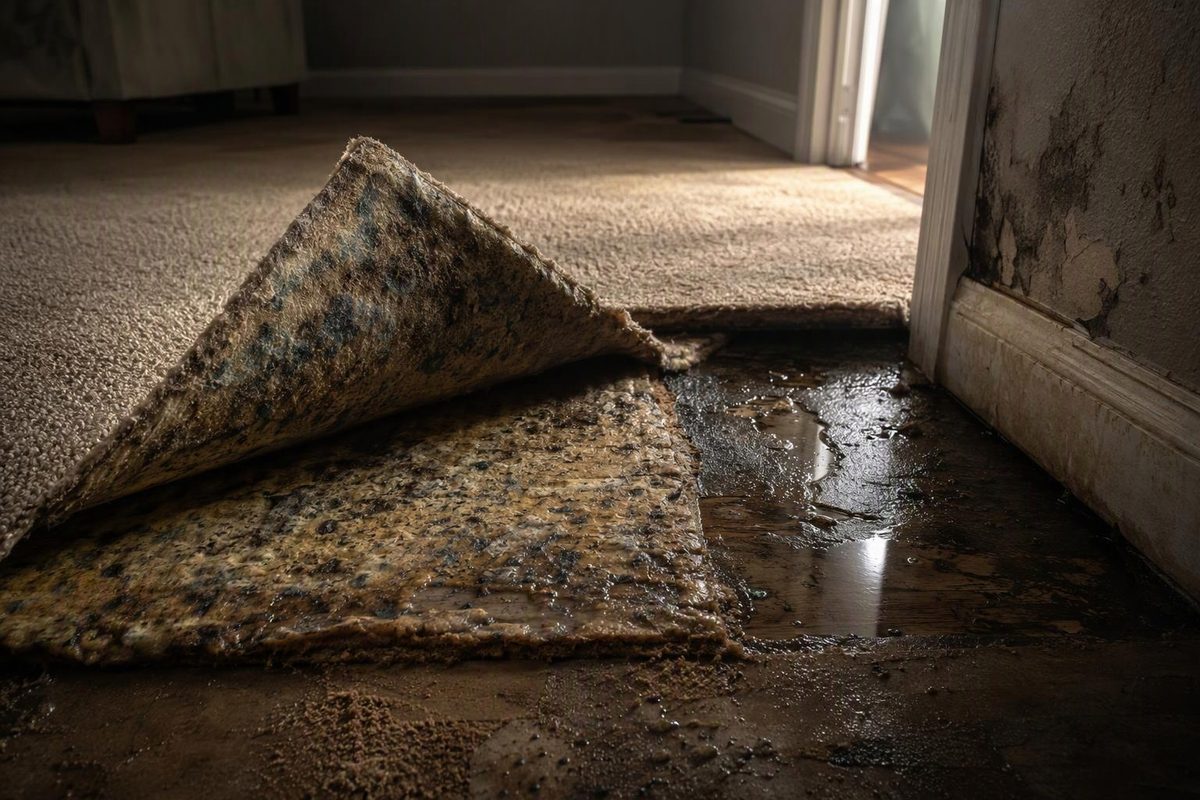
Water-damaged carpet may be salvageable after a small, promptly discovered clean-water leak—but drying the surface is not enough. The backing, padding and subfloor all need attention. Carpet saturated by sewage or river flooding belongs on the replacement route, not the ordinary carpet-cleaning route.
Start with the water source and elapsed time, then inspect the flooring assembly before deciding what to keep.
1. Make the area safe and stop the leak
Stop if water may have reached electrical equipment or outlets. Never operate an electric tool or appliance while standing in water. If you can turn off the main power from a dry location, do so; if reaching it requires entering standing water, call an electrician instead. After a flood, have the electrical system checked before restoring power. CDC’s flooded-home safety guidance covers these precautions.
Stop the water at its source if you can do so safely. Once the area is safe, move furniture out of the affected area and limit walking on wet carpet: moisture can weaken latex backing, and traffic can cause the backing layers to separate. NC State Extension explains this risk.
Record when the leak likely started—not just when you noticed it—and photograph the affected floor and water source. Renters should notify the building owner or manager promptly.
2. Choose the salvage or replacement route
Clear-looking water is not necessarily sanitary. Use its source, what it contacted and how long it remained untreated to guide the decision.
| What happened? | What to do next |
|---|---|
| A small leak from a clean water-supply line, discovered promptly | Salvage may be possible if the carpet, backing and underlying layers can be cleaned and dried quickly. |
| Dishwasher or washing-machine discharge | Call a water-damage professional. Contaminated padding needs disposal; carpet salvage requires professional assessment. |
| Sewage backup, river or stream flooding, or seawater inundation | Replace saturated carpet and padding; arrange contaminated-water cleanup. |
| Unknown source, unknown duration, or materials wet for more than 48 hours | Do not assume this is a routine clean-water DIY job. Arrange assessment for contamination and mold. |
NC State Extension’s carpet-specific guidance distinguishes clean water from appliance discharge and highly contaminated floodwater. If the source or duration is uncertain, professional assessment is the cautious route. EPA’s homeowner guidance recommends experienced professional help for sewage or other contaminated-water damage.
For clean-water damage, 24–48 hours is a drying target, not a waiting period or a guarantee of safety. EPA notes that mold may occur before 48 hours and does not inevitably occur afterward. Its cleanup table calls for drying carpet and backing within that window, while also cleaning and drying the subfloor. EPA water-damage guidance.
3. Inspect below the pile
Identify what is installed: wall-to-wall carpet over cushion, carpet glued directly to the floor, or an area rug. Check the product label or purchase records for fiber type and care instructions before applying cleaners. Valuable rugs and unfamiliar natural-fiber products warrant specialist advice.
For carpet over padding, the hidden layers often decide whether salvage is practical. The IICRC warns that padding can remain wet even when the surface fibers feel dry. Musty odors may originate in the backing or subfloor, where surface cleaning cannot resolve the source. IICRC consumer care guidance.
If you see mold or suspect hidden mold because of a musty odor, stop before pulling up the carpet yourself. Disturbing hidden growth can release spores; EPA advises considering an experienced professional for this investigation. EPA’s hidden-mold guidance.
Otherwise, have the affected layers exposed and checked:
- Padding: NC State Extension allows restoration when clean water has wetted only part of the room’s padding for less than 48 hours. Widespread saturation generally calls for replacement; padding saturated with contaminated water should be discarded.
- Plywood subfloor: Remove wet carpet and pad as needed so the plywood can dry completely before reinstallation.
- Particleboard beneath the carpet: Prolonged wetting can cause swelling and disintegration. Damaged material needs replacement, not concealment under new cushion.
- Concrete: It also needs cleaning and drying; a dry carpet surface does not establish that the slab beneath it is ready.
These checks are supported by NC State Extension and EPA’s subfloor drying requirement.
4. Dry a small clean-water loss—or hand it over
DIY drying is most reasonable when the source is known to be clean, the area is limited, the leak has stopped, there are no signs of mold and all wet layers are accessible. If you cannot dry the assembly promptly and thoroughly, bring in a restoration professional rather than waiting for the surface to improve.
- Extract water promptly. Once electrical safety is established, use equipment rated for liquid pickup, such as a wet/dry vacuum or water extractor—not an ordinary dry vacuum.
- Address the pad and underside. For a small wetted area over cushion, lifting the carpet and removing wet padding may be necessary. If you cannot safely release and reinstall it, use a restoration professional or carpet installer.
- Reduce humidity and move air. EPA recommends dehumidification and fans for clean-water carpet drying. Do not start fans before determining that the water is clean or sanitary. Suspected mold needs assessment first, not airflow across the affected carpet.
- Verify the hidden layers before closing the floor up. Do not reinstall over a damp subfloor. Ask a restoration contractor how they checked the backing, pad and substrate—not simply whether the pile feels dry.
The drying methods come from EPA; the small-area lifting and padding-removal approach is described by NC State Extension.
Do not pour bleach or deodorizer into the carpet as a substitute for extraction, drying or removal. Use only product-compatible cleaning treatments. EPA does not recommend bleach as a routine mold-cleanup practice, and moldy porous materials such as carpet may be impossible to clean completely. EPA’s homeowner mold guide.
5. Check repairability after drying
Drying cannot reverse every kind of damage. Look for separated backing layers, damaged seams, persistent odor, visible mold and ripples that remain after drying.
Prolonged or repeated water exposure can cause delamination, the separation of carpet backing layers. Specialist repair is sometimes possible, but may not be economical given the carpet’s age and condition. IICRC delamination guidance.
If the carpet is sanitary, dry and structurally sound but still loose, an installer can assess restretching; see carpet buckling causes and repair choices. Persistent mustiness or visible mold calls for further inspection, not another fragrance treatment.
Before authorizing reinstallation or replacement, confirm three things: the water source is fixed, the substrate is dry and sound, and the carpet being retained is clean and repairable.