
Waterproof Flooring: Choose by Water Exposure, Not the Label
Compare vinyl, tile and waterproof-rated laminate, then check seams, subfloor moisture and warranty exclusions before choosing a floor.
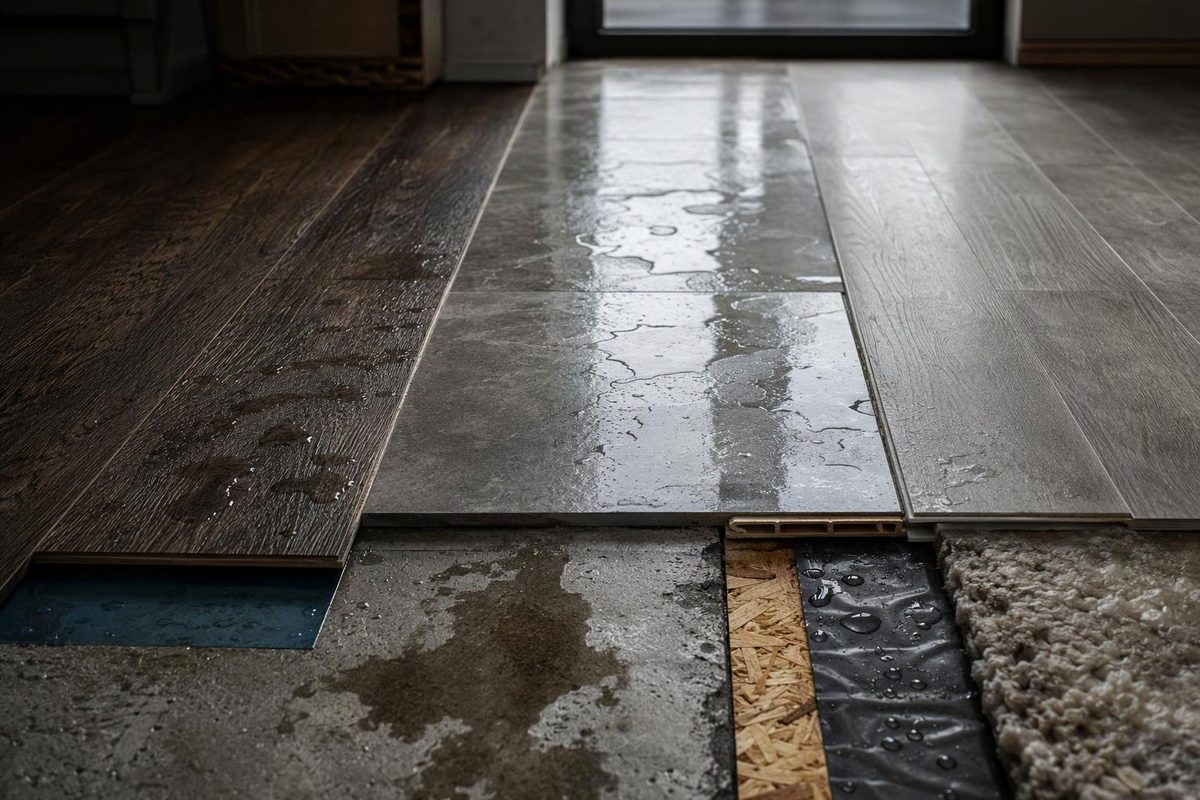
Waterproof flooring is not the same as a waterproof room. A plank may resist water damage while excessive moisture beneath it supports mold growth or causes edges to lift, as the resilient warranty linked by COREtec warns. The useful question is not just “Is this floor waterproof?” but “Which parts are protected, against what water exposure, and under which installation conditions?”
Start with where the water comes from
Before comparing samples, put the room into one of these groups:
- Spills from above: dropped drinks, wet shoes or occasional splashes that you can clean up promptly. Waterproof-rated vinyl or laminate may suit this exposure, subject to the exact product’s instructions.
- Repeated wetting: a bathroom floor frequently splashed by bathers, or a wet room. Assess the whole installation—seams, perimeter, penetrations and, where applicable, drainage—not just the surface material. Do not treat ordinary bathroom approval as approval for a shower floor.
- Moisture from below: a damp concrete slab, crawl-space moisture or an unresolved leak. Stop product selection until the source and the flooring’s moisture limits are understood.
- Possible flooding: recurring basement water or plumbing failures. Do not buy on the assumption that a waterproof label means the installed floor can remain in place after a flood.
For a wood-look sample, first identify whether it is vinyl, laminate or real wood. Similar-looking surfaces can come with very different installation requirements. “Water-resistant” and “waterproof” labels are starting points; the matching technical documents decide suitability.
Compare the main options
Luxury vinyl plank and tile: a practical shortlist for everyday spills
Waterproof-rated LVP and LVT are worth considering when you want a plank or tile appearance in a kitchen, entryway or other spill-prone room. But do not assume that a waterproof plank creates a watertight installation.
Check whether the warranty protects only the product or also the material beneath it. The residential resilient warranty linked for COREtec Originals and Pro, revised June 2023, limits topical coverage to water that does not flow over surface edges, including room edges and cut boards. It excludes flooding and standing water from leaking plumbing or appliances. That is a much narrower promise than flood protection.
Waterproof construction also does not waive preparation. COREtec requires a clean, flat, dry and structurally sound subfloor, with moisture tested and problems treated before installation. Its installation guidance directs buyers to product-specific instructions.
Choose the installation system separately from the water rating. Our vinyl flooring comparison explains sheet, glue-down and click-lock options.
Sheet vinyl: consider it when fewer seams matter
Sheet vinyl deserves a place on the shortlist for bathrooms, laundry rooms and kitchens. Mannington identifies its waterproof sheet products as suitable for these rooms partly because they can be installed without seams. Whether your room can be covered in one piece depends on its dimensions and layout. Mannington’s sheet vinyl overview.
Ask the installer to show any proposed seams and explain the manufacturer-approved treatment for them, along with details at the tub, doorway and other edges. A seamless field still leaves a perimeter to address.
Do not treat sheet vinyl as a cure for a damp substrate. Mannington’s installation overview identifies subfloor type, structure and moisture levels as jobsite conditions that affect installation.
Ceramic or porcelain tile: specify the waterproofing beneath it
For a shower or wet-room project, think in terms of a waterproof tile assembly, not simply waterproof tile. Schluter’s shower-system handbook explains that ceramic and stone coverings are not inherently waterproof and need a moisture-management system in shower applications.
An ordinary bathroom floor and a shower floor are different specifications. Waterproofing outside the shower can be beneficial, but requirements depend on the project. With Schluter DITRA, for example, making the installation waterproof requires sealing membrane seams and floor-to-wall connections—not merely laying the mat. Schluter’s floor-waterproofing guidance.
Also evaluate wet grip and structural suitability. See our bathroom tile flooring guide for those selection checks.
Waterproof-rated laminate: read the conditions closely
Do not judge all laminate by either an older product’s reputation or a newer product’s waterproof claim.
Pergo’s December 2024 WetProtect laminate warranty covers everyday household spills and wet mopping, including defined subfloor damage from moisture passing through properly installed joints. Maintaining waterproof coverage requires approved perimeter sealing. However, subfloor damage from moisture originating underneath the flooring or entering around the perimeter is excluded, as are moisture-damage events such as flooding, standing water, leaking pipes and appliance leaks. Those terms apply to the specified product, not every Pergo floor or every laminate. Pergo WetProtect warranty.
Laminate belongs on the shortlist only when its exact room approval and installation conditions match your project.
Check these details before ordering
Get the installation manual and warranty for the exact collection and product code. Then confirm:
- Room approval: Does the manufacturer permit this location and exposure?
- Moisture testing: Which test and limit apply to your wood or concrete subfloor? Record the results; do not substitute a universal “safe” number.
- Water-control layers: Is a vapor barrier, waterproof membrane or another specified layer required? These perform different jobs.
- Edges and joints: What treatment is required at seams, expansion gaps, doorframes, tubs and penetrations?
- Coverage: Are leaks, standing water and subfloor damage included or excluded? Does an accepted claim cover labor?
- Whole-project cost: Include preparation, approved accessories, sealing, transitions and removal—not just the flooring price.
Stop before installation if there is an active leak, unexplained dampness, a soft subfloor or moisture readings outside the product’s limits. Fix and verify those conditions first. The waterproof label is a material-selection aid, not permission to cover a moisture problem.